90% of Craft Chocolate Makers Let Their Chocolate Age for Weeks or Even Months. Here Is Why They Do It.
Yes, I came up with the 90% statistics. You won’t find this data anywhere else and will have to trust me on this one.
I’ve visited around 20 craft chocolate factories in Italy and 60 more around the world. And not once did I forget to ask: “Do you age your chocolate? And if so, why do you do it?”. It’s just a topic I am really curious about.
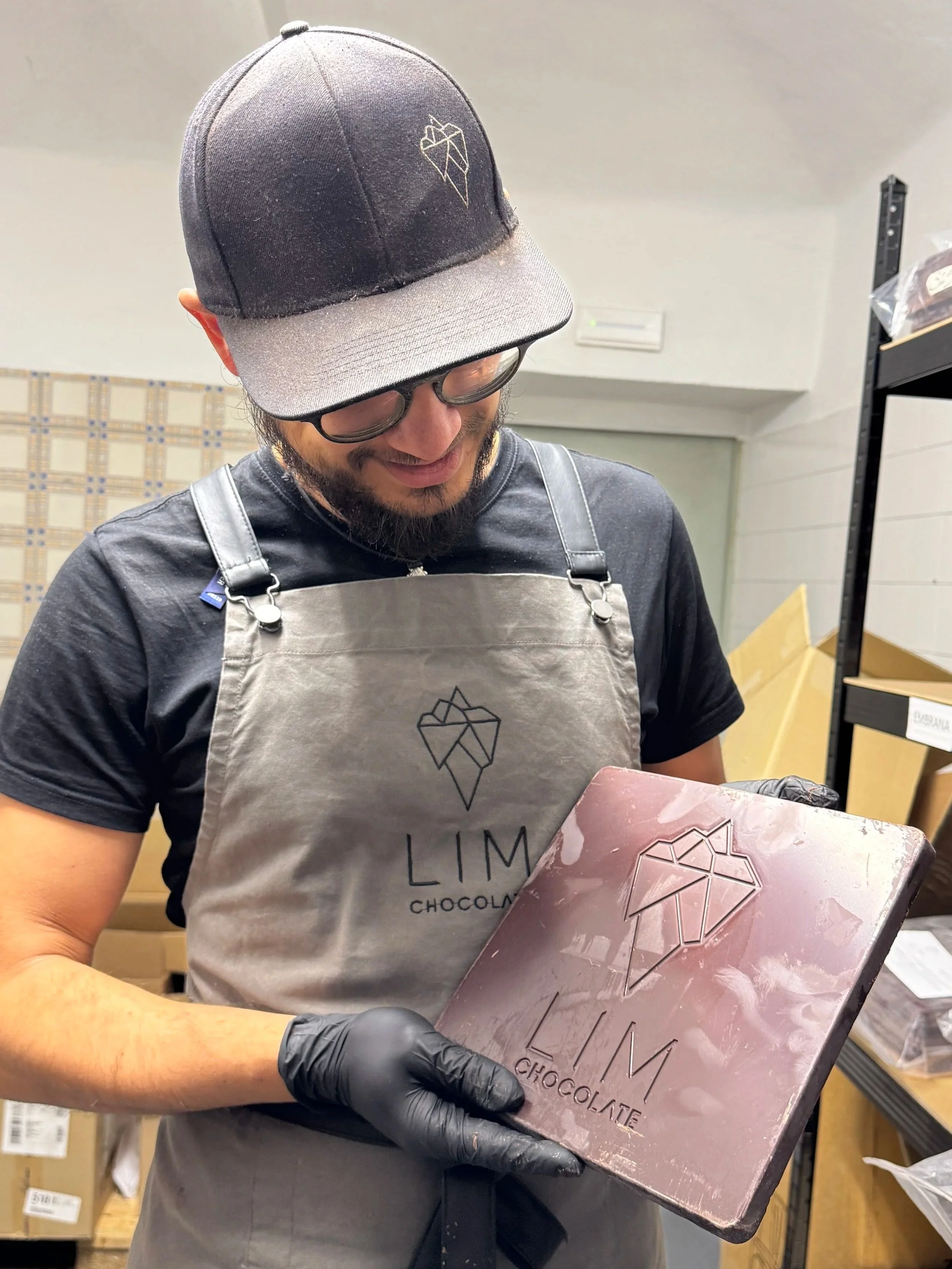
LIM CHOCOLATE, Fossano (Italy), 2025
I can count on my fingers the times a craft chocolate maker gave me a negative answer. Almost everybody let their cacao or chocolate age before selling it. But why the heck would they do it? It’s not like craft chocolate makers are swimming in gold that they can afford to delay sales even further.
Let’s dive deep to find out their reasons.
Aging chocolate (which is pretty much waiting for something to change inside the chocolate) is closer to a mistery than a science.
Although many professionals agree that aging does something to the chocolate, nobody could really give me a scientific explanation. Aging chocolate is part of the empirical knowledge passed down from maker to maker, whispered in each other’s ears like a grandma’s secret ingredient. It’s one of those extra steps that is never explained or even addressed in books. Yet craft chocolate makers swear they can feel, smell and taste the difference.
Now for the sake of accuracy, we’ll have to distinguish between two different scenarios: when the craft chocolate maker ages the chocolate voluntarily, and when the aging happens accidentally.
ACCIDENTAL AGING
Some stuff naturally lays around the chocolate factory for a long time: cacao beans pile up in the temperature-controlled warehouse waiting for their turn to be processed; blocks of untempered chocolate rest on the shelves ready to be melted down for next week’s batch; slow seasons keep finished products inside their pretty packaging longer than they should.
“I don’t let my chocolate age. It just so happens that we make a lot of chocolate ahead of time in the summer to be ready for the Christmas rush.”
This is not aging, but the natural work cycle inside the factory.
INTENTIONAL AGING
It takes a certain level of obsession with quality to delay cash for the sake of a better flavor profile. And this is exactly what craft chocolate makers are known for: sacrificing the business aspect to make the best chocolate they can.
Chocolate makers can age their raw material, semi-finished or finished products for different reasons.
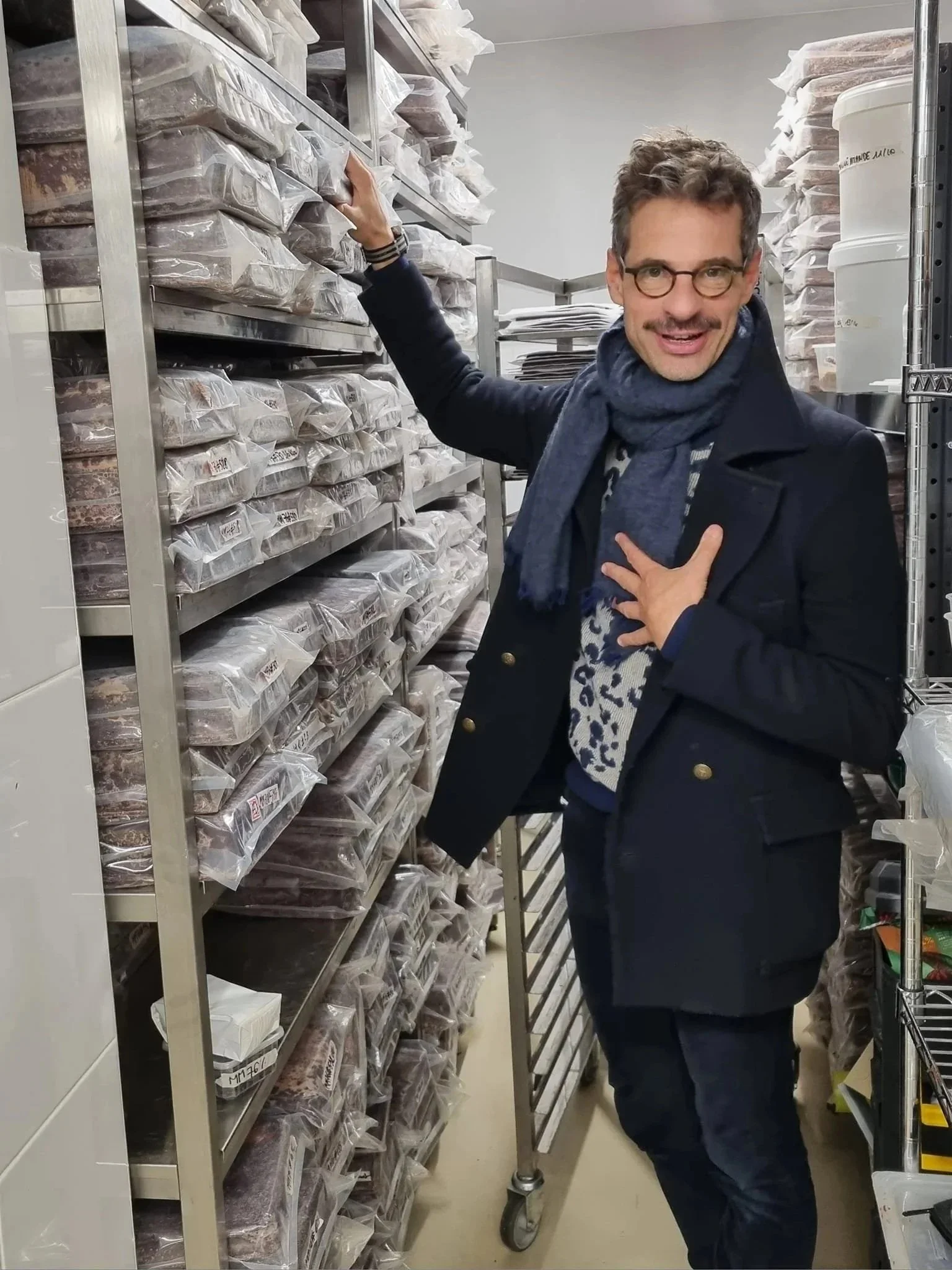
PLAQ CHOCOLAT, Paris (France), 2023
AGING CACAO BEANS
Even after farmentation and drying, cacao beans continue to change and evolve inside. Volatile acids fly away, astringency continues to reduce and aromas keep developing.
Now, specialty cacao beans don’t need that much “resting in the warehouse” to begin with. This is usualy a practice for the big industry that buys bulk cacao (aka the lowest quality beans on the market). But sooner or later, every craft chocolate maker will experience a less-than-ideal batch of beans delivered at the door.
Some cacao beans can look and smell exactly like the chocolate maker remembered them from the first sample. Some other times, acidity is through the roof and the beans could use some extra down time. In worse scenarios, the batch displays harsh flavors or light defects. In these cases, the cacao bags are (intentionally) left inside the warehouse for a week or two longer than anticipated, and get re-checked in case of positive changes.
So, these are the main reasons why chocolate makers may let their cacao beans age:
get rid of excessive acidity
(hope to) get rid of harsh flavors or light defects
It’s worth noticing that the longer the cacao beans lay around the warehouse, the higher the risks of contamination, molding and loss of interesting aromatic compounds. So this practice isn’t put into place with perfect cacao beans, but only with disappointing batches.
AGING UNTEMPERED CHOCOLATE
If chocolate makers decide to age their chocolate, this is the stage where they are most likely going to do it.
Fresh out of the melangeur or the ball mill, the chocolate is molded into big blocks (usually 10 lbs/5 kilos) that are tightly wrapped, labelled, dated and left to rest for weeks on dedicated shelves.
Untempered chocolate is in a highly pourous state. If tempering bonds and ties together all the elements inside the chocolate, in an untempered block the particles of each ingredient are still free to move around. Take cacao butter for example. Before reaching the Form V during tempering, cacao butter can easily move around and rise to the surface (fat bloom).
Untempered chocolate is still kinda “loose and alive” inside, and internal changes are more likely to happen. It is believed that the natural cacao flavors continue to move around, develop, amalgamate and stabilize for a fuller flavor profile.
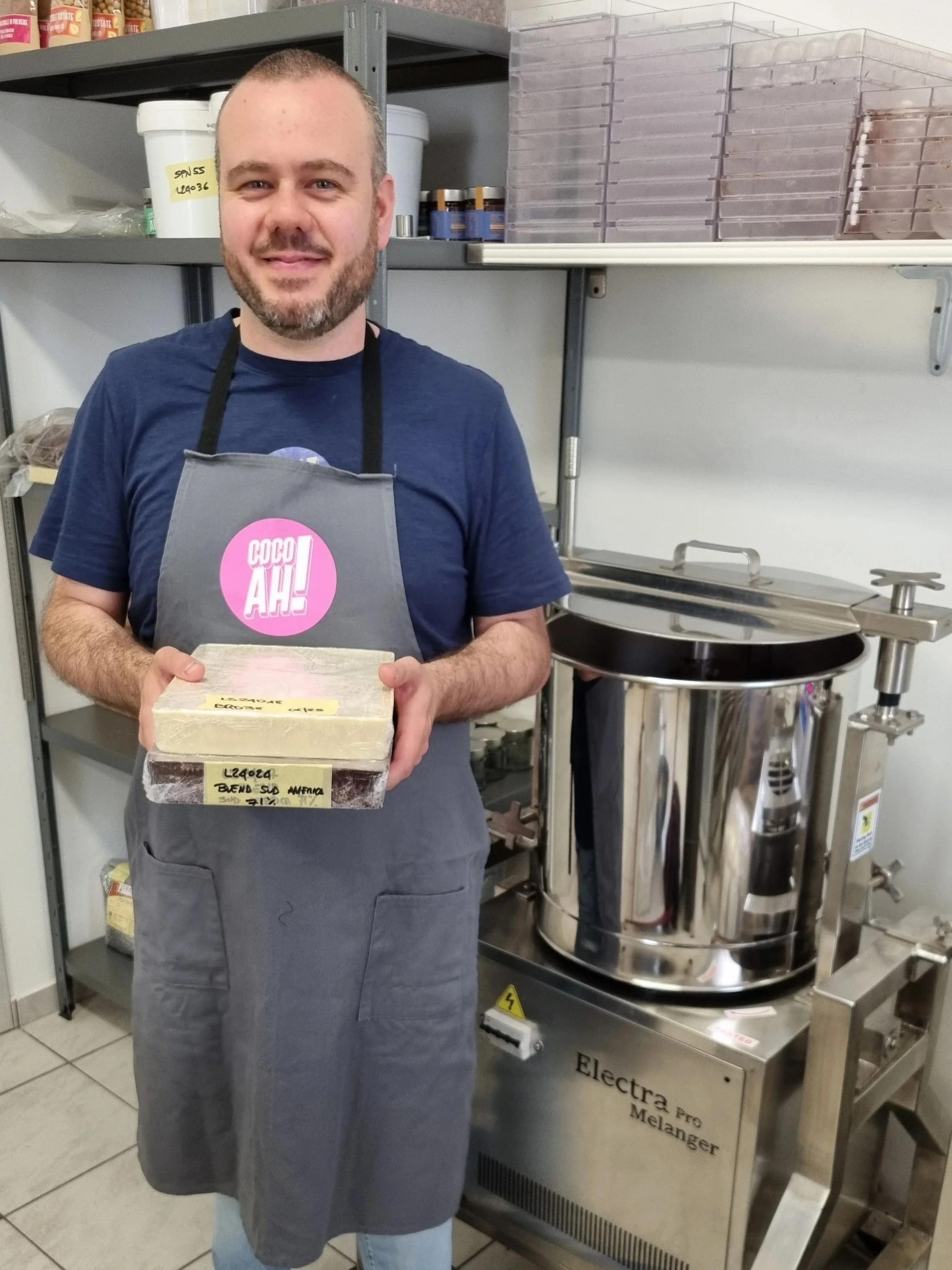
COOAH! CHOCOLATE, Milan (Italy), 2024
So, these are the main reasons why chocolate makers may let their untempered chocolate age:
round off any harsh tasting note
correct flaws
make the cacao flavors develop even deeper
let the flavor profile settle and set
(Skeptics of chocolate aging argue that all the efforts taken during this stage will be nullified when the chocolate is melted again to be tempered.)
AGING TEMPERED CHOCOLATE
If untempered chocolate is pourous and loose, tempered chocolate is tight and firm. But the door is still slightly cracked open for flavor changes to enter.
The reasons to age tempered chocolate (before it’s settled into a bar form) have less to do with “hoping for something to get better” and more to do with “checking how the final consumer will experience the chocolate”. Because fresh chocolate doesn’t make it into the hands of customers immediately.
Weeks, months and even years can pass before a batch is sold & savored after production. Inclusions can taste weaker and interesting aromas can flatten. So craft chocolate makers wait some time for the chocolate to settle into its very final flavor profile.
There is also the case of tempered chocolate aged for … the sake of aging! Just like wines and liquors, craft chocolate can become vintage and gain value as it is left to aged for several years (without water activity there is no risk of mold, especially in dark chocolate).
So, these are the main reasons why chocolate makers may let their tempered chocolate age:
create Vintage Limited Edition products
let the chocolate bars settle into their final flavor profile
check whether the flavors of an inclusion stay persistent or get lost over time
be aware of what the final consumer will experience
be sure that the packaging isn’t impacting the final flavor of the chocolate
AGING TEMPERED CHOCOLATE WITH OTHER INGREDIENTS
Since cacao butter never stops absorbing external flavors, craft chocolate makers have one last card to play in the aging game.
I’ve seen finished chocolate aged in wine, rum and whisky barrels. But also aged with tea leaves, palo santo, herbs and spices. The end result is not like a regular inclusion bar, where the added ingredients are powdered and physically added to the chocolate. Here the extra flavors aren’t meant to be strong and bold.
This kind of aging creates delicate aromas that are never pungent, never sovrasting the natural cacao aromas. They feel like an aromatic “aura” that surrounds the chocolate and gives it a deeper complexity, perfectly integrating with the natural cacao nuances.
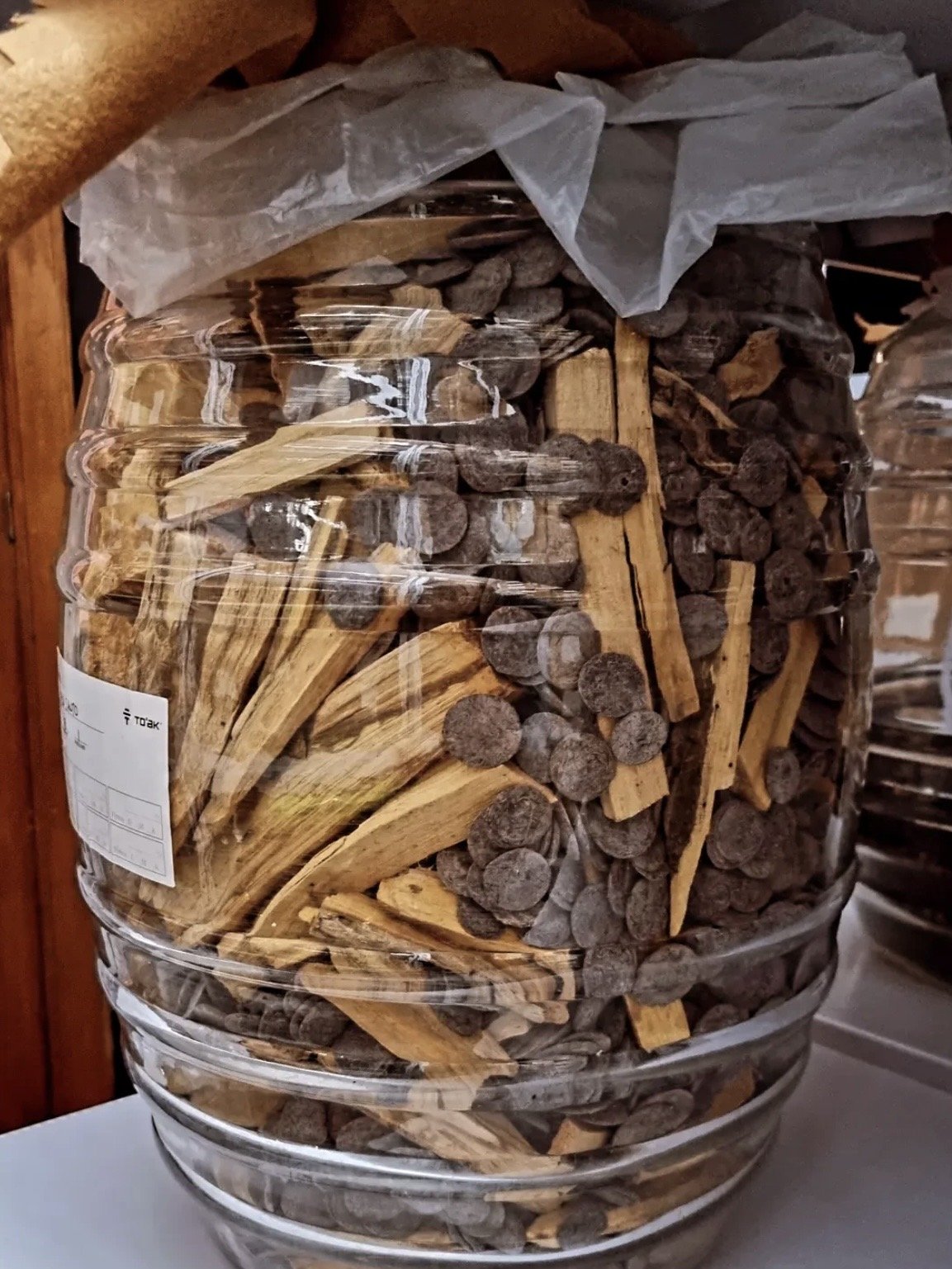
TO’AK CHOCOLATE, Quito (Ecuador), 2022
So what about the skeptics?
You won’t hear everybody talk highly about the effects of aging chocolate. Some professionals simply don’t believe in this approach (at least until somebody will care enough to prove them wrong with a scientific study). The first-hand experience of their colleagues doesn’t seem to convince them enough.
I’ve personally never compared the same exact chocolate aged VS non-aged. I can only tell you that whenever a chocolate bar is exceptionally good, complex and remarkable, 99% of the times it was made by a craft chocolate maker that believed in the process of aging. But hey, this is just a very personal experience.
Would love to know what you think about the process of aging chocolate in the comments.